
Products >> Multi ONVIF Server
Multi ONVIF Server - Run Multiple ONVIF Devices on One PC or Embedded System
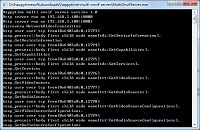


Happytime multi ONVIF server target file size is small, which is very suitable for embedded development. It can be used to develop network video transmitter (NVT) devices or network video recording (NVR) devices, making it easier for embedded developers to debug on a PC and improve development efficiency.
Full support for the ONVIF specification
Simulate multiple onvif devices
Does not depend on any third-party libraries
Compiled target file is small, suitable for embedded development
ONVIF interface compatibility is tested by ONVIF official test tool





Passed compatibility test
Compatible with ONVIF Profile S version
Compatible with ONVIF Profile S Windows version
Compatible with ONVIF Profile S Linux version
View feature list
View compatibility test report
Compatible with ONVIF Profile G version
Compatible with ONVIF Profile G Windows version
Compatible with ONVIF Profile G Linux version
Key Features of Multi ONVIF Server
✅ Simulate Multiple ONVIF Devices: Up to 400 devices (release version)
✅ No Port Conflicts: Each virtual device uses isolated ports
✅ Full ONVIF Profile Support: S, T, G, C, A, M
✅ Lightweight & Fast: Core binary ~300KB, low memory
usage
✅ Cross-Platform: Windows, Linux, macOS, Android, iOS, Embedded Linux
✅ No Third-Party Dependencies: Built-in XML, HTTP, SOAP, and TLS
✅ Embedded Ready: Ideal for edge devices and NVR development
✅ Recording Configuration: Configure
recording and tracks for large-scale NVR compatibility testing
✅ Custom Event Sending: Send custom ONVIF events for event-handling and VMS integration testing
Compatible with ONVIF profiles
Compatible with ONVIF Profile S, Video Streaming & PTZ
Compatible with ONVIF Profile T, Enhanced Video & Analytics
Compatible with ONVIF Profile G, Recording, Search & Replay
Compatible with ONVIF Profile C, Door Management
Compatible with ONVIF Profile A, Access Control
Compatible with ONVIF Profile M, Metadata & Events
Use Cases & Applications
NVR Compatibility Testing: Test if your NVR can detect and manage 100+ ONVIF cameras
ONVIF Client Development: Debug your VMS without needing physical cameras
Large-Scale System Simulation: Simulate entire camera networks for stress testing
Embedded Device Integration: Add multi-device ONVIF support to your NVR or gateway
Access Control Testing: Emulate multiple ONVIF door controllers
Support multiple platforms
Happytime multi ONVIF server source code is written by C language
Support Windows platform
Support Linux / UNIX platform
Support Android platform
Support iOS / MAC platform
Support embedded Linux platforms
Does not depend on any third-party libraries
Happytime multi ONVIF server source code does not depend on any third party libraries
Built-in xml parser source code
Built-in http server source code
Built-in http client source code
Built-in soap parser source code
Clear and concise code
framework
Frequently Asked Questions (FAQ)
What is a multi ONVIF server?
A multi ONVIF server is a software that simulates multiple ONVIF-compliant devices (like IP cameras or NVRs) on a single machine. Happytime Multi ONVIF Server solves port conflicts and allows up to 400 virtual devices for testing and development.
How does it solve port conflicts?
Each simulated ONVIF device runs on isolated ports (HTTP, HTTPS, RTSP). This prevents conflicts when running multiple instances on one PC or embedded system.
Can I simulate multiple ONVIF cameras?
Yes! You can simulate dozens or hundreds of ONVIF IP cameras with unique RTSP streams, PTZ, and image settings. Perfect for NVR testing.
Is it suitable for embedded systems?
Yes. The core binary is only ~300KB, written in C, and supports cross-compilation for embedded Linux, Android, and IoT devices.
What's the difference between ONVIF Server and Multi ONVIF Server?
Standard ONVIF Server simulates one device. Multi ONVIF Server simulates many devices on one machine, solving port conflicts.
Can I use it as an ONVIF SDK?
Yes. The source code is C-based, dependency-free, and can be integrated into your product as an ONVIF-compliant SDK. Contact sales for licensing.
Version limitation
The demo version maximum support two devices.
The release version maximum support 400 devices.